
Rwanda’s Vision 2050, as set out in the official abridged document published by the Ministry of Finance and Economic Planning (MINECOFIN, 2020), is built on a remarkable record of institutional rebuilding and rapid socio-economic transformation. The country’s most measurable progress occurred during Vision 2020, which guided national priorities from 2000 to 2020. Over those two decades, Rwanda sustained an average GDP growth rate of 7.2 percent, reduced poverty from 60.4 percent to 38.2 percent, and increased life expectancy from 49 to 69 years. The country also rose from 149th to 38th on the World Bank Doing Business ranking, reflecting improvements in governance, regulatory clarity, and public-sector efficiency.
Vision 2050 builds on these achievements by setting an ambitious national aspiration: to transition Rwanda into an upper-middle-income economy by 2035 and a high-income economy by 2050. This requires raising GDP per capita from roughly US$970 in 2020 to more than US$4,000 by 2035, and above US$12,000 by 2050. The document recognizes that Rwanda’s structural constraints, such as its landlocked geography and limited natural resources, demand a development strategy rooted in human capital, governance consistency, economic diversification, and technological innovation.
FDI, Stability, and Investor Confidence
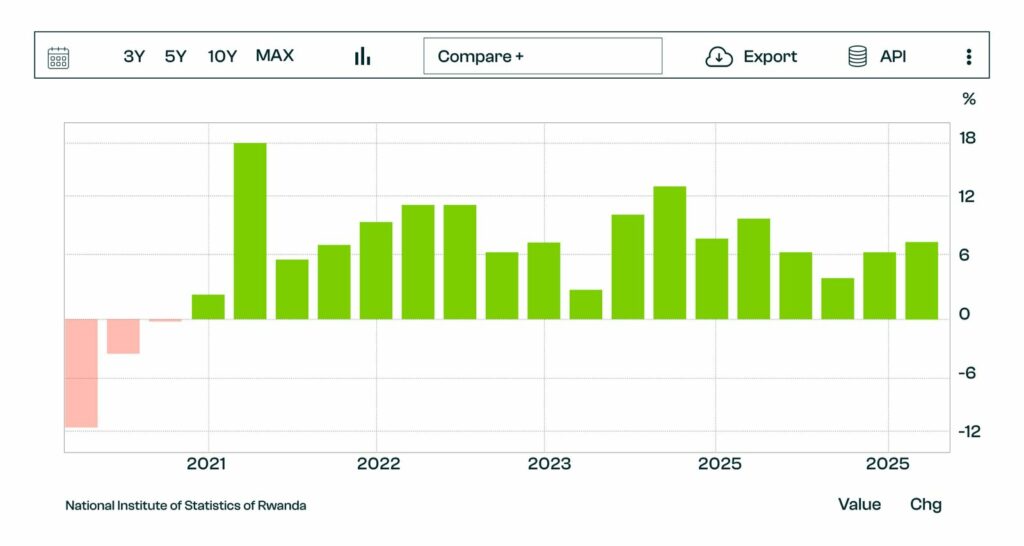
Foreign direct investment offers one of the clearest indicators that Rwanda’s long-term strategy is gaining credibility. In 2024, the country attracted roughly US$650 million in FDI, marking an 18 percent year-on-year increase. GDP grew by 7.9 percent, nearly double the Sub-Saharan African average. Rwanda’s regulatory framework supports this momentum by allowing 100 percent foreign ownership, processing investment registrations in about seven days, and digitising more than 400 government services. These measures align with Vision 2050’s emphasis on efficient governance and a private-sector-led economy.
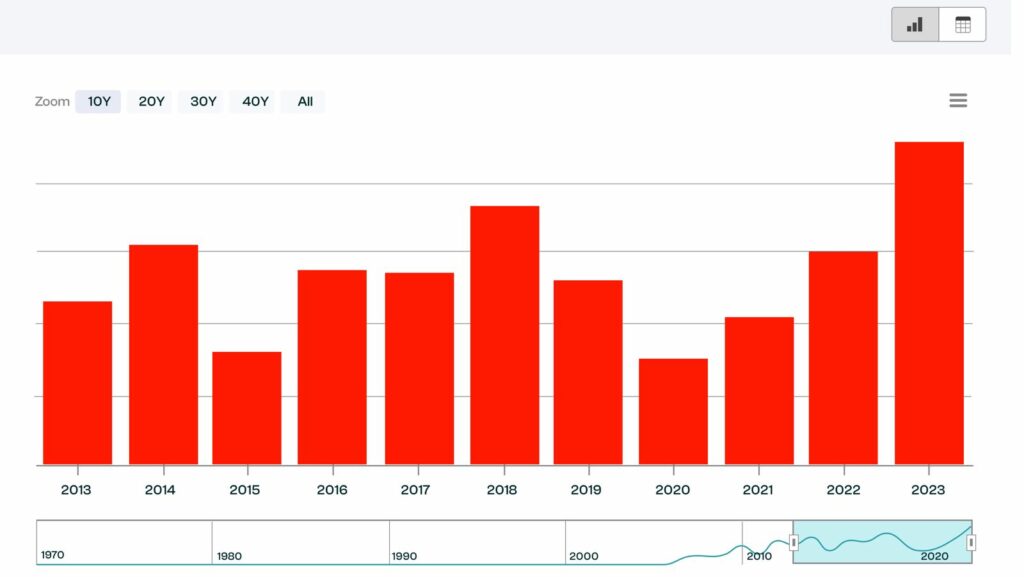
Rwanda Foreign Direct Investment | Historical Data | Chart | 1970-2023
Industrialization as the Engine of Future Growth
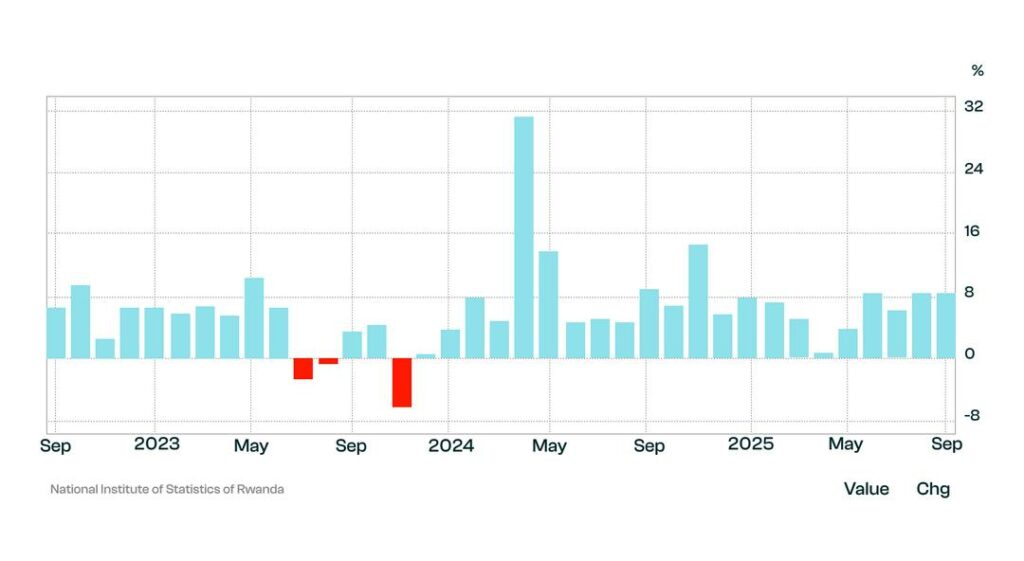
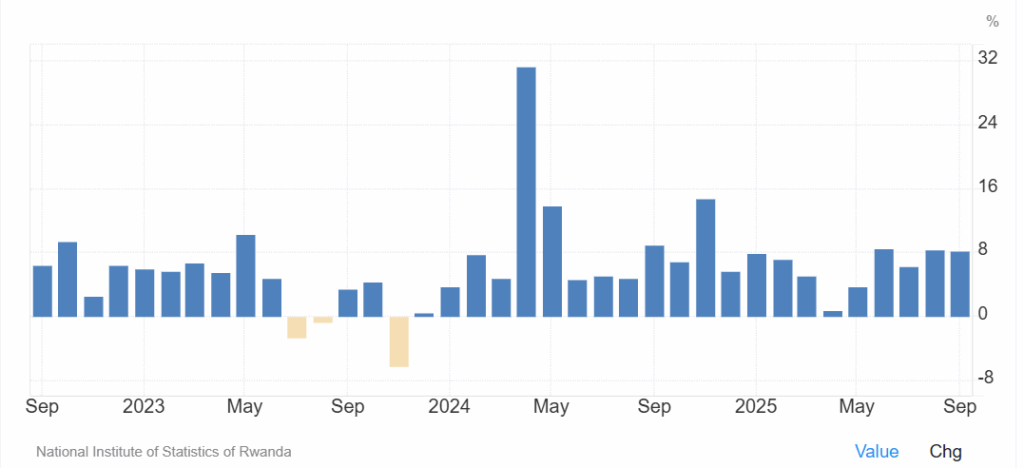
Industrialization is central to the transformation envisioned in Vision 2050. Manufacturing currently contributes around 17 percent of GDP and is targeted to rise above 30 percent by 2035. In 2024, the sector grew by 10.6 percent, and manufactured exports reached US$500 million, up from US$380 million in 2020. The Kigali Special Economic Zone, which hosts more than 140 firms and generates over US$400 million annually in export earnings, exemplifies Rwanda’s emerging industrial base. Vision 2050 stresses that sustained structural change requires robust value chains, skills development, and infrastructure capable of supporting high-value manufacturing.
Infrastructure, Connectivity, and Landlocked Geography
Infrastructure development forms another pillar of long-term transformation. Rwanda invests between 10 and 12% of GDP in infrastructure annually, far above the African average of 3%. Electrification increased from 10 percent in 2009 to 75% in 2024, and broadband penetration now exceeds 60%. Over 2,600 kilometres of roads have been constructed or upgraded, and the US$1.3 billion Bugesera International Airport is expected to strengthen Rwanda’s role as a regional logistics hub. These investments align directly with Vision 2050’s objectives of modern cities, efficient transport, and a digital-ready economy.
Human Capital, Digitalization, and Governance: The Three Pillars of Vision 2050
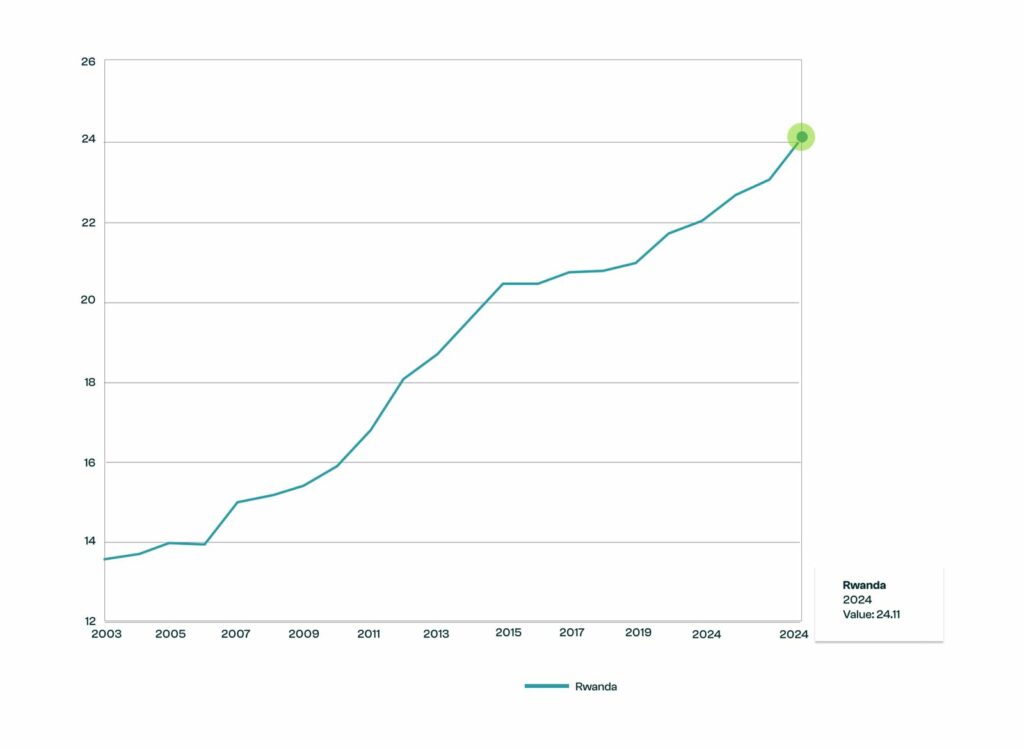
Human capital, innovation, and governance excellence are the backbone of the Vision. By 2030, Rwanda aims to increase tertiary enrolment from 17%. ICT’s contribution to GDP is projected to rise from 3 percent to 15%. Kigali Innovation City is expected to attract over US$2 billion in investment and support roughly 50,000 skilled jobs. Governance remains one of Rwanda’s strongest assets. The country ranks third in Africa on the Mo Ibrahim Governance Index and consistently records the region’s highest corruption-control scores, with CPI values between 53 and 55.
Viewed together, Vision 2050 represents Rwanda’s attempt to manufacture competitiveness through stability, clarity, and long-term thinking. The success of this strategy will depend on the country’s ability to expand exports, reduce logistics costs, and deepen integration with the 180-million-person East African Community.
Rwanda’s Blueprint for Prosperity: Key Goals of Vision 2050
Vision 2050 clearly outlines the long-term aspirations Rwanda aims to achieve. These are the national targets that define the country’s pathway to 2035 and 2050. The goals include:
1. Achieving High-Income Status
Raising GDP per capita above US$12,000 by 2050, supported by sustained growth, economic diversification, and globally competitive industries.
2. Building a Knowledge-Based, Innovation-Driven Economy
Positioning ICT, research, digital services, biotechnology, and advanced manufacturing at the center of economic activity.
3. Creating a Globally Competitive Workforce
Expanding tertiary education enrollment from 17% to 40%, strengthening TVET systems, and investing in STEM capabilities to support modern industries.
4. Developing Modern, Inclusive, Well-Structured Cities
Promoting smart, efficient, high-density urban centers and expanding affordable housing, clean transport, and sustainable infrastructure.
5. Strengthening Industrial and Export Capacity
Growing manufacturing’s contribution to more than 30% of GDP and expanding exports through regional integration and value-added production.
6. Ensuring Universal Access to Quality Services
Providing universal healthcare, full electrification by 2030, digital access, clean water, and effective public service delivery.
7. Deepening Good Governance and Citizen Trust
Maintaining accountability, transparency, unity, and national cohesion as central pillars of Rwanda’s political and institutional identity.
8. Building Climate Resilience and Environmental Sustainability
Managing land, forests, and water resources sustainably while protecting vulnerable populations from climate impacts.
9. Expanding Private Sector Leadership
Transforming the private sector into the engine of growth by improving the business environment, expanding industrial parks, and promoting investment-friendly policies.
10. Strengthening National Identity, Unity, and Social Inclusion
Creating an equitable society where prosperity is shared, opportunities are inclusive, and the social fabric remains strong.
What Vision 2050 Seeks to Bring to Rwanda and How the Reforms Help
Vision 2050 seeks to reposition Rwanda as a prosperous, united, inclusive, and globally integrated nation. The reforms outlined in the document help by raising productivity, strengthening governance, improving public services, supporting innovation, and expanding economic opportunities. Predictable policymaking reduces investor risk. Industrialization deepens structural transformation. Infrastructure enhances nationwide efficiency. Governance excellence promotes trust and stability. Human capital equips the population for higher-paying jobs. Together, these reforms lay the groundwork for an economy capable of sustaining high growth.
What Vision 2050 Means for Investors, Businesses, and Foreign Participants
Rwanda’s Vision 2050 reshapes the country into a market defined by predictability, institutional discipline, and long-term strategic intent. For investors, this matters because regulatory risk is low and institutions operate with an unusual degree of stability. Policies rarely shift abruptly, licensing follows predictable timelines, and long-term planning is backed by measurable national targets. This lowers the uncertainty premium that typically pushes capital away from small or frontier markets. As a result, sectors like manufacturing, logistics, ICT, healthcare, tourism, and agro-processing become more investable because the rules governing them are clear, stable, and consistently applied.
For businesses operating within Rwanda, the benefits are equally practical. Administrative processes are faster because government systems are heavily digitized; over 400 public services are available online, reducing the delays and inconsistencies that come with manual procedures. Digitization also lowers friction in compliance, tax filings, permits, and procurement, making day-to-day operations more efficient. Improved utilities and transport networks reduce the hidden costs that typically undermine competitiveness in emerging markets. Reliable electricity, expanding road networks, and modern aviation infrastructure turn Rwanda’s small size into an advantage, not a limitation.
Sector-specific incentives in Special Economic Zones further support business growth. Firms benefit from tax incentives, streamlined customs procedures, and factory-grade infrastructure with high uptime. This environment is especially attractive for manufacturers and export-oriented firms that need predictable inputs and reliable logistics. At the same time, Rwanda’s young, increasingly skilled labor force provides a talent base that can support ICT firms, professional service companies, and technology startups.
Conclusion
Vision 2050 presents one of Africa’s most disciplined attempts at long-range economic transformation. Rwanda is betting not on natural resources or demographic scale, but on stability, governance, infrastructure, and human capital. If the country can maintain its current trajectory, the next three decades will reveal whether these foundations can elevate Rwanda into the ranks of high-income economies, a feat rarely achieved on the continent.